TPO and EPDM: The Two Dominant Commercial Roofing Membranes
Most building owners in Nampa, Meridian, and the wider Treasure Valley face the same dilemma when looking at a bid sheet. You see two acronyms, TPO and EPDM, and the prices often look frustratingly similar.
Making the right choice comes down to more than just the initial price tag.
These two single-ply membrane systems dominate the United States market for good reason. Each offers a specific set of strengths that align with different building goals.
Experience has taught us that the “best” roof isn’t about the material itself. It is about how that material handles your specific risks, from standing water to the intense Idaho summer heat.
We want to help you move past the jargon. Let’s look at the data, the real-world performance, and the practical differences so you can make a confident decision for your property.
What Is TPO Roofing?
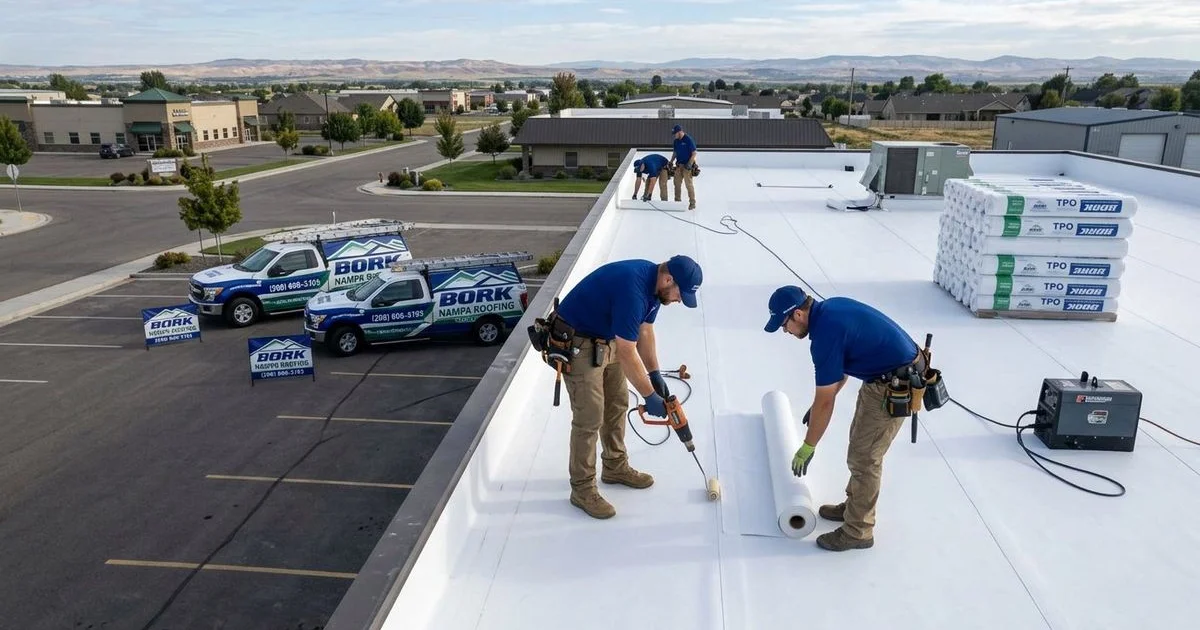
TPO (Thermoplastic Polyolefin) is currently the fastest-growing commercial roofing membrane in the country. It is a single-ply blend of polypropylene and ethylene-propylene rubber, usually reinforced with a polyester scrim for added strength.
Manufacturers like GAF, Carlisle SynTec, and Elevate (formerly Firestone) produce these rolls in white, tan, or gray. They typically measure 10 to 12 feet wide. We install these sheets using one of three methods:
- Mechanically Attached: Screwed directly into the deck through the insulation.
- Fully Adhered: Glued to the substrate for a smooth, wind-resistant finish.
- Ballasted: Held down by smooth river rock or pavers (less common for TPO).
The Power of the Welded Seam
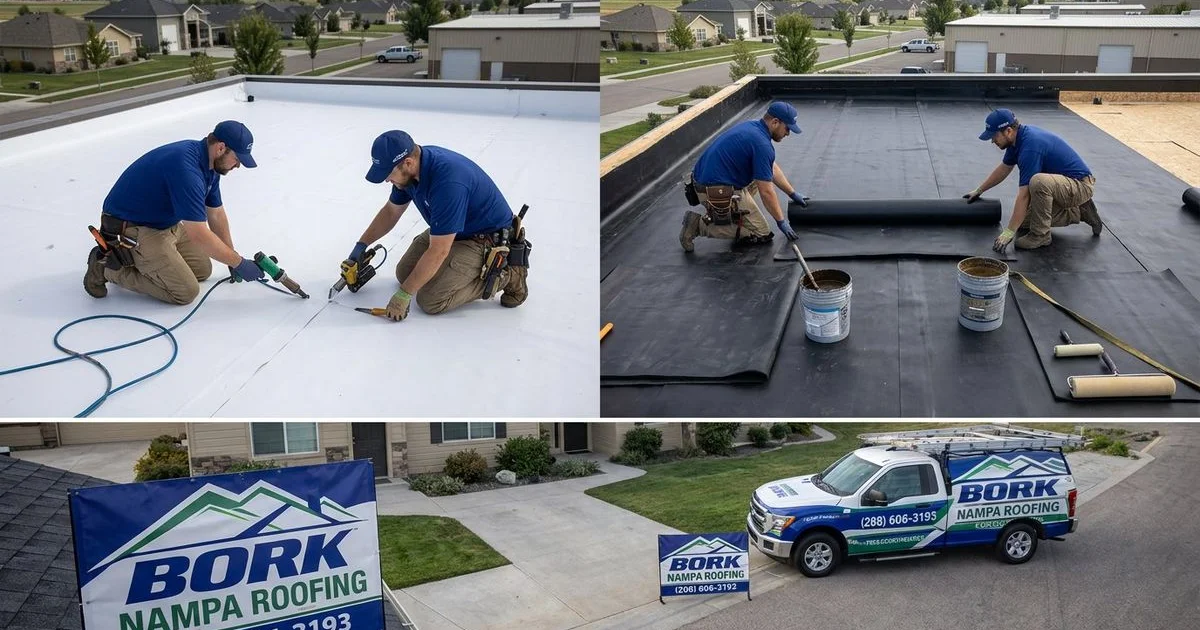
The defining feature of TPO is how the sheets connect. We use a hot-air gun or a robotic welder to heat the seams to roughly 1,000°F.
This process fuses the top and bottom sheets into a single, homogeneous piece of material. The seam actually becomes stronger than the membrane itself. For a large flat roof, this creates a monolithic watertight barrier that is incredibly resistant to leaks.
Why It’s Popular Now
TPO hit the mainstream in the 1990s and has since captured over 50% of the single-ply market. It offers a “best of both worlds” solution. You get the UV-reflecting energy efficiency of PVC but at a price point closer to rubber roofing.
What Is EPDM Roofing?
EPDM (Ethylene Propylene Diene Monomer) is what most people refer to as a “rubber roof.” It is a synthetic rubber membrane that relies on carbon black to block UV radiation, which gives it that signature dark color.
Contractors can purchase EPDM in massive rolls, ranging from 10 to 50 feet wide. Those 50-foot rolls are a game-changer for large warehouses because they drastically reduce the number of seams we need to create in the field.
The Seaming Difference
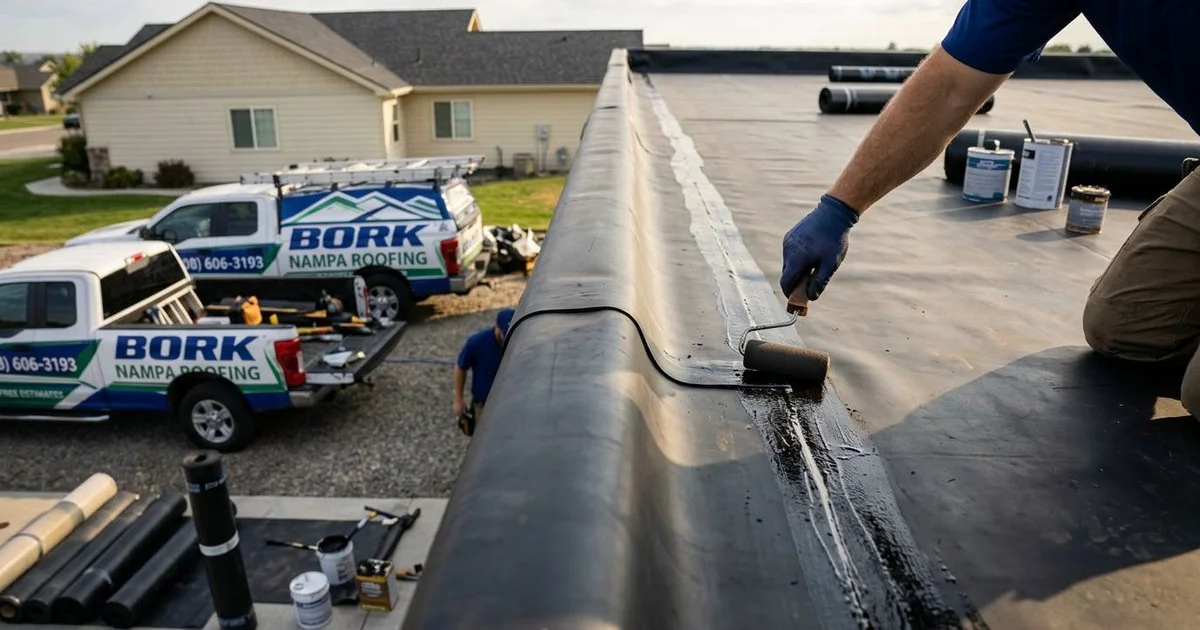
Unlike TPO, EPDM is a thermoset material. This means it cannot be melted or heat-welded. To join the sheets, we use primer and specialized seam tape or liquid adhesives.
This chemical bond is strong, but it relies on proper execution rather than molecular fusion. EPDM has a massive head start on TPO in terms of history. It has been protecting buildings since the 1960s, providing real-world proof of its longevity.
Flexibility is Key
The rubber compound makes this membrane exceptionally flexible. It can stretch up to 300% without breaking. This characteristic is vital for buildings that experience significant settling or thermal expansion.
Cost Comparison
Budget is almost always the deciding factor. While material prices fluctuate based on oil markets and supply chains, the installed cost usually falls into these ranges for the Idaho region:
| System Type | Cost Per Sq. Ft. (Installed) | Primary Cost Drivers |
|---|---|---|
| EPDM (Rubber) | $5.00 - $8.50 | Labor is lower on open areas (large sheets), but higher on detail work (corners/pipes). |
| TPO (White) | $5.50 - $9.00 | Slightly higher material cost, but automated welding speeds up installation on large decks. |
Note: These ranges include standard insulation and labor but vary based on roof accessibility and the number of penetrations (like HVAC units and vents).
Pricing rarely stays static. We find that for most projects, the difference between a 60-mil TPO system and a 60-mil EPDM system is often less than 10% of the total project cost.
Because the price gap is narrow, we recommend focusing on the long-term energy savings and maintenance needs rather than the upfront sticker price.
Energy Efficiency
TPO is the clear winner when it comes to cooling efficiency.
A standard white TPO roof boasts a Solar Reflectance Index (SRI) that often exceeds 100 near the start of its life. This allows the roof to reflect up to 80 percent of solar radiation.
For a building in the Treasure Valley, this reflectivity keeps the roof surface closer to air temperature rather than baking in the sun.
The Heat Absorption Problem
Black EPDM acts like a heat sink. On a 95-degree day in Nampa, a black rubber roof can easily reach surface temperatures of 170 degrees or higher.
This heat does not just stay on the roof. It radiates downward into your facility. Your HVAC system has to work much harder to combat that thermal load.
Real-World Savings
We see the impact on utility bills firsthand.
- Cooling Dominant: If you have a conditioned warehouse or office space, white TPO can lower peak cooling demand by 15 to 30 percent.
- Heating Dominant: If your building is primarily heated and lacks air conditioning, the heat absorption of black EPDM might actually be a slight benefit in winter.
However, given our intense summer peaks, TPO is generally the smarter financial play for energy-conscious owners in this region.
Durability and Lifespan
Both materials are built to last, but they age differently.
- TPO: Expected lifespan of 20 to 30 years.
- EPDM: Expected lifespan of 25 to 30+ years.
EPDM holds the title for proven longevity. We have seen rubber roofs installed in the late 1970s that are still watertight today. TPO is a newer technology, but modern “Class A” formulations from top manufacturers have largely solved the cracking issues that affected early versions in the 1990s.
The Seam Maintenance Factor
This is the most critical distinction for long-term ownership.
- TPO Seams: Because they are heat-welded, TPO seams rarely fail. If the weld was done correctly, it is permanent.
- EPDM Seams: The adhesive tape eventually dries out. Over a 20-year period, you will likely need to strip and re-tape some seams, usually around the 15-year mark.
Shrinkage is another factor to watch. EPDM has a tendency to shrink over time, which can pull the membrane away from parapet walls or curbs (a phenomenon called “bridging”). TPO is dimensionally stable and does not shrink.
Performance in Idaho’s Climate
The high desert climate of the Treasure Valley tests roofs in unique ways. We evaluate materials based on three specific local stressors.
1. Freeze-Thaw Cycles
Temperatures here can swing from 20°F at night to 50°F during the day in spring. EPDM remains flexible down to -40°F or lower. It handles this thermal shock exceptionally well. TPO is stiffer in the cold, but standard 60-mil reinforced TPO handles Idaho winters without cracking.
2. High-Altitude UV Exposure
UV radiation destroys roofing materials over time. EPDM’s carbon black formulation is naturally UV stable. TPO relies on chemical stabilizers (titanium dioxide) to block UV rays. While both work, EPDM requires no chemical additives to resist the sun, giving it a slight natural advantage in raw material stability.
3. Hail and Puncture Resistance
TPO generally outperforms non-reinforced EPDM in hail tests. The reinforcing scrim in TPO helps prevent punctures from jagged hail or dropped tools. EPDM absorbs impact well because it is rubbery, but sharp objects can slice it more easily.
Pro Tip: If your building is in a high-risk hail zone, we often recommend upgrading to a “fleece-back” version of either membrane for superior puncture resistance.
Installation Differences
TPO Installation This process is more technical. It requires robotic welders and specialized hand tools.
- Pros: The welding is fast on open areas.
- Cons: It is weather-sensitive. We cannot weld TPO effectively if it is raining or if the temperature drops too low without taking special precautions.
EPDM Installation This process is more manual but flexible.
- Pros: We can install EPDM in colder weather than TPO. The large sheets mean we can cover a building (“dry it in”) very quickly.
- Cons: The detail work (corners, pipes, drains) takes longer because each piece must be cut and glued by hand.
If your project timeline forces an installation in November or December, EPDM might be the safer choice to avoid weather delays.
Repair and Maintenance
Every roof eventually leaks or suffers damage. How easily can we fix it?
TPO Repairs
Repairing TPO requires a hot-air welder and electricity.
- The Challenge: As TPO ages, the surface oxidizes. We cannot weld new TPO to old TPO without aggressive cleaning and chemical preparation.
- The Benefit: Once prepared and welded, the patch is as strong as the original roof.
EPDM Repairs
Repairing EPDM is low-tech and accessible.
- The Challenge: Adhesive patches have a shorter lifespan than welded patches.
- The Benefit: A maintenance team can often perform temporary emergency repairs with simple pressure-sensitive tape and primer. No generators or heavy equipment are required.
Which System Should You Choose?
Deciding between these two giants depends on your building’s specific profile.
Choose TPO if:
- Cooling Costs Matter: You want to reduce summer AC bills by reflecting heat.
- Restaurant/Grease Output: TPO is chemically resistant to animal fats and grease vents (EPDM swells when exposed to grease).
- Visual Appeal: You need a white roof for aesthetic or code reasons.
- Puncture Concern: You expect foot traffic and want a reinforced membrane.
Choose EPDM if:
- Longevity is King: You plan to own the building for 30+ years and want the proven track record.
- Cold Climate: Your building is in an area with extreme cold snaps or high snow loads.
- Simple Layout: You have a large, open roof with few HVAC units or penetrations.
- Budget Repair: You want a roof that is easy to patch without specialized contractors.
Get Expert Commercial Roofing Advice
Selecting the right membrane is only half the battle. The quality of the installation determines whether that 30-year warranty is actually worth the paper it is written on.
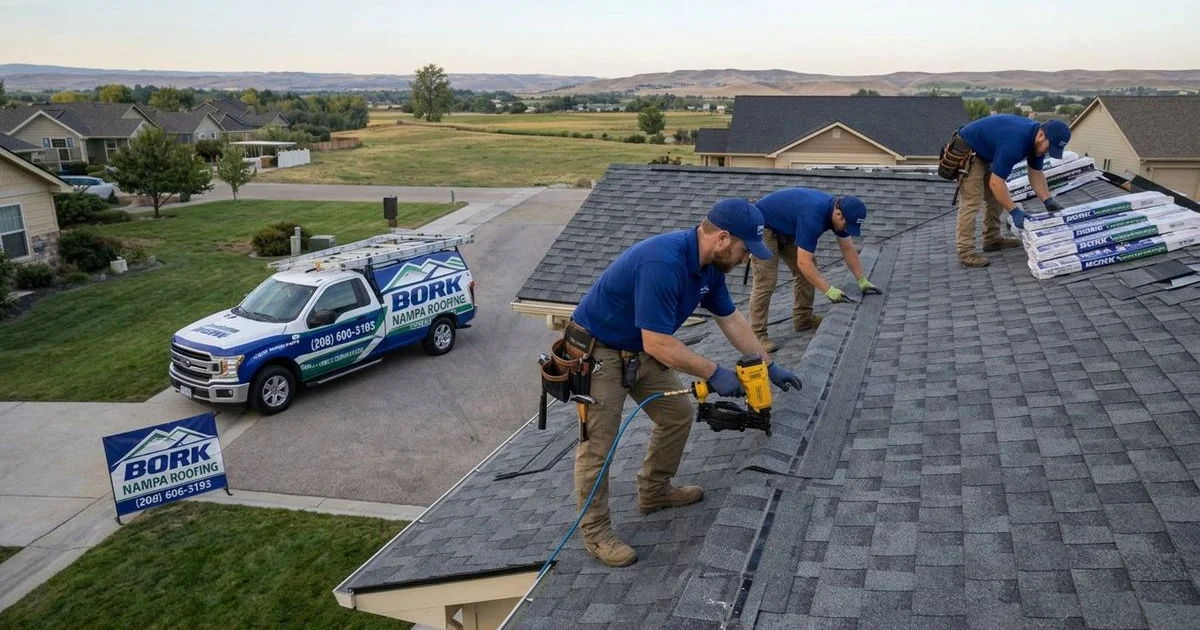
At Bork Nampa Roofing Contractors, our team installs both systems daily. We know which manufacturer specs hold up in the Treasure Valley and which ones fail prematurely.
We are ready to walk your roof, assess your current insulation and drainage, and give you an honest recommendation based on data, not just sales quotas.
Call (208) 606-3193 for a free estimate on your commercial roofing project.

Bork Roofing Team
Licensed Roofing Contractor
Licensed roofing contractors serving Nampa and the Treasure Valley.