Choosing Between Standing Seam and Corrugated Metal Roofing
You know that feeling when you realize a home improvement decision is going to stick with you for the next fifty years.
We see homeowners in Nampa and the Treasure Valley face this exact pressure every day.
Selecting a metal roof is a smart move, but the choices can get technical very quickly.
The two main contenders are always standing seam and corrugated panels.
While they share a material, they are completely different systems in terms of how they protect your home and wallet.
Our team has installed countless variations of both, so we understand exactly how they perform in Idaho winters and summers.
Understanding the specific mechanics of these systems will save you from future headaches.
We are going to break down the real cost differences, the installation nuances, and the maintenance realities you need to know.
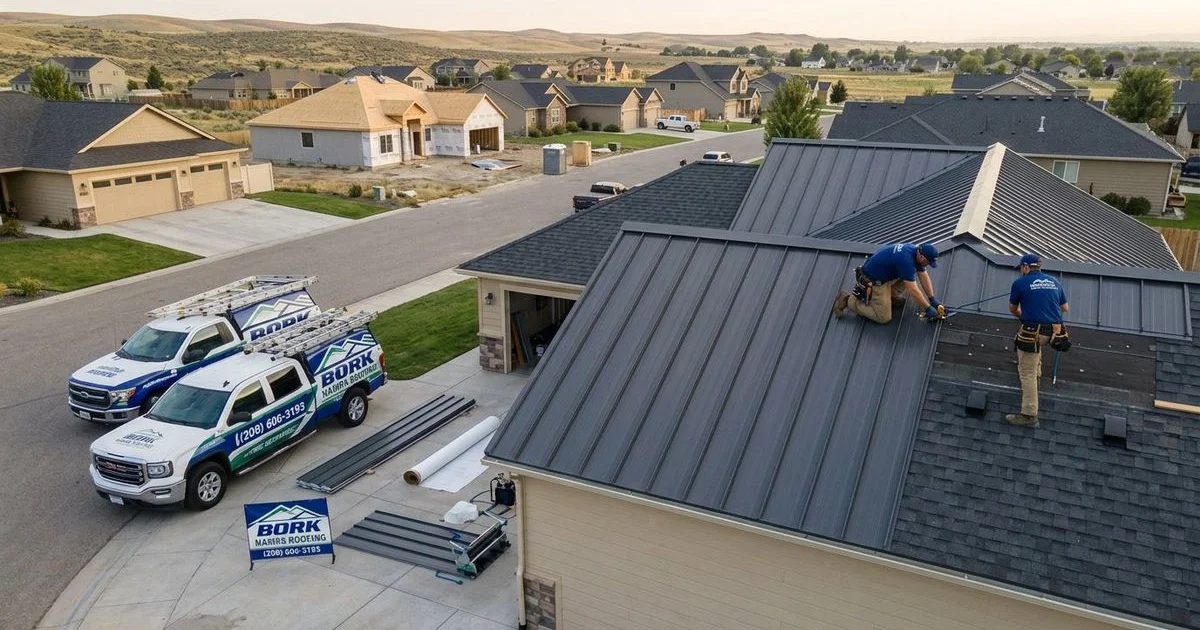
What Is Standing Seam Metal Roofing?
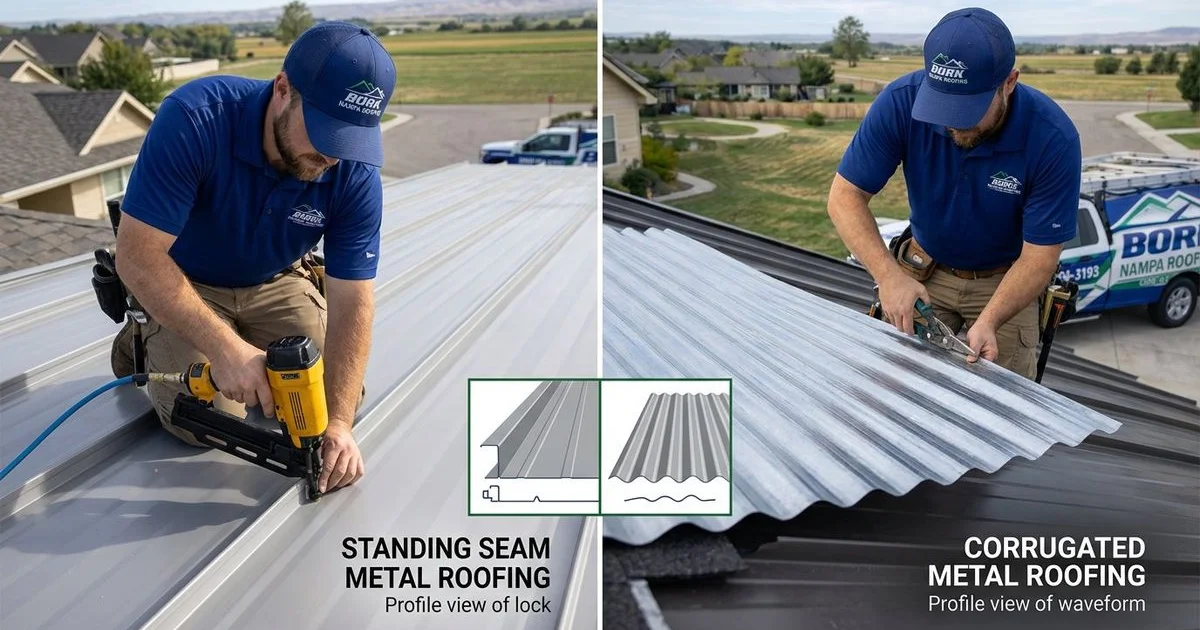
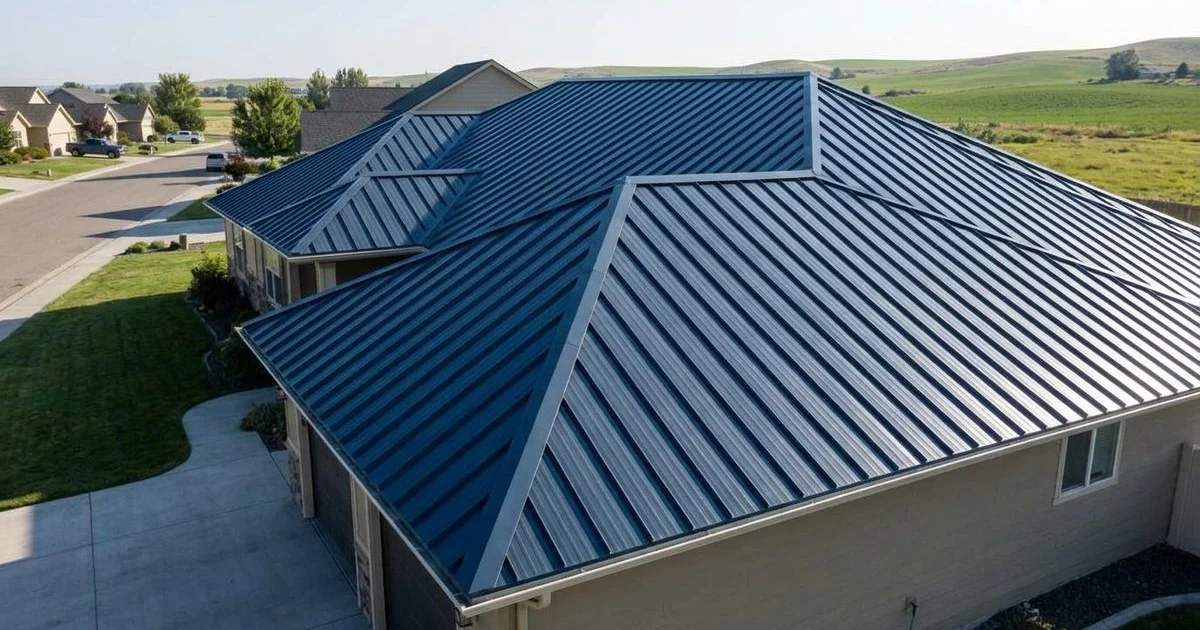
Standing seam roofing is defined by a concealed fastener system that offers superior weather protection.
We consider this the “gold standard” for residential metal roofing because it removes the biggest risk factor: holes.
Wide, flat panels run vertically from the ridge to the eave.
These panels connect via raised seams that lock together, usually 1 to 2 inches above the flat surface.
The “lock” is the critical part.
Installers use either a mechanical seamer to fold the metal over or a snap-lock system that clicks into place.
This creates a continuous, watertight skin over your home.
Why the “floating” system matters:
Clips secure the panels beneath the surface, allowing the metal to expand and contract freely with temperature changes.
This thermal movement is essential in our region, where temps swing from freezing to boiling.
Key characteristics of standing seam:
- Hidden Fasteners: No screws penetrate the exposed surface.
- High-Grade Materials: Typically uses thicker 24-gauge or 22-gauge steel.
- Modern Aesthetic: Clean vertical lines that suit contemporary and farmhouse styles.
- Weather Tightness: The raised seam prevents water entry even during heavy runoff.
What Is Corrugated Metal Roofing?
Corrugated metal roofing relies on an exposed fastener system and structural ribs for strength.
We frequently install this on barns, shops, and homes aiming for a specific rustic aesthetic.
The panels feature a repeating wave or “U-panel” pattern.
These ribs make the thin metal rigid, allowing it to span across roof purlins without sagging.
Installers drive screws directly through the metal panel and into the wood deck below.
Every screw has a rubber or neoprene washer that compresses to create a seal against the rain.
Modern corrugated metal is vastly improved over the old “tin roofs” of the past.
You can now get Kynar 500 paint finishes that resist fading and chalking for decades.
Key characteristics of corrugated metal:
- Exposed Fasteners: Thousands of screws are visible on the roof surface.
- Economical Gauge: often uses thinner 29-gauge or 26-gauge steel.
- Traditional Look: The classic wavy profile offers a distinct, textured appearance.
- Rigid Attachment: Panels are pinned in place, which limits thermal movement.
Cost Comparison: The Price of Performance
The price gap between these two systems is the first thing most homeowners notice.
We want to be transparent about where that money goes.
Standing seam costs more because the materials are thicker, and the labor is far more intensive.
Corrugated metal is faster to manufacture and much quicker to install.
Estimated Cost Per Square Foot (Installed):
| Cost Factor | Corrugated Metal | Standing Seam |
|---|---|---|
| Material Cost | $1.50 - $3.00 | $4.00 - $8.00 |
| Labor Cost | $3.50 - $6.00 | $6.00 - $10.00 |
| Total Range | $5.00 - $9.00 | $10.00 - $18.00 |
Note: Prices fluctuate based on steel market rates and roof complexity.
For a standard 2,000-square-foot roof, a standing seam system might cost between $20,000 and $36,000.
A corrugated roof on the same home typically lands between $10,000 and $18,000.
That upfront savings is significant.
However, we always remind clients to factor in the “lifetime cost.”
Standing seam adds significant resale value and rarely requires maintenance.
Corrugated roofs will likely require a full screw replacement service midway through their lifespan.
Durability and Maintenance Realities
Both systems will outlast an asphalt shingle roof, but their maintenance schedules are very different.
We find that standing seam is truly a “set it and forget it” solution.
Standing Seam (40-70 Years): Since the fasteners are hidden, they are never exposed to UV rays, wind, or water. The metal creates a solid shield. Unless a tree falls on it, there is almost zero maintenance required for the life of the roof.
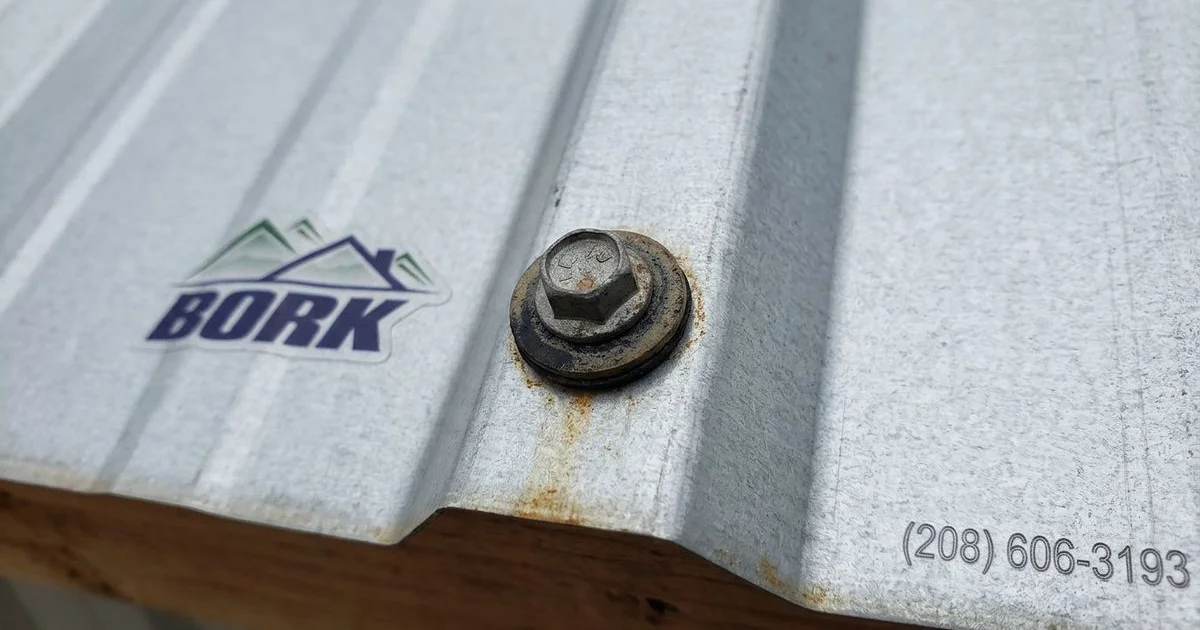
Corrugated Metal (25-45 Years): The weak link is the washer. Exposed fasteners face the brutal Idaho sun every single day. Over 10 to 15 years, those rubber washers dry out, crack, and shrink.
The “Wallow” Effect: Thermal expansion forces the metal to move, but the screws hold it tight. This tug-of-war can “wallow out” the screw holes over time, creating gaps slightly larger than the screw shank. Homeowners must inspect these roofs every few years and retighten or replace screws to prevent leaks.
Weather Performance in Idaho
Nampa weather throws everything at a roof, from heavy snow loads to high desert winds.
We assess performance based on three specific local hazards.
1. Snow Shedding and Ice Dams
Standing seam acts like a slide. The flat surface allows snow to slide off easily, preventing heavy buildup that can stress the structure. Corrugated ribs can trap snow and ice, potentially leading to ice dams if the attic is not well-insulated.
2. Wind Uplift
Standing seam systems are engineered for high-velocity winds. Because the seams are mechanically locked, they are incredibly difficult for wind to peel up. Corrugated panels rely on the pull-out strength of the screws. If the wood deck softens over time, strong gusts can loosen these panels.
3. Impact Resistance (Hail)
Both systems are tough, but the steel gauge matters. We recommend asking for a UL 2218 Class 4 Impact Rating on your panels. A standing seam roof with 24-gauge steel is highly resistant to denting from hail. Thinner 29-gauge corrugated panels are more likely to show cosmetic dimpling after a hailstorm.
Aesthetics and Curb Appeal
Your roof represents about 40% of your home’s exterior visibility.
We believe the style should match the architecture of the house.
Standing Seam offers a crisp, tailored look. It pairs perfectly with:
- Modern minimal homes
- Barndominiums
- Suburban residential renovations
- Mid-century modern revivals
Corrugated Metal brings texture and shadow. It looks best on:
- Cabins and mountain homes
- Ranch-style bungalows
- Detached garages and shops
- Industrial-chic designs
Aesthetics are subjective, but resale value is not. Real estate data suggests that standing seam roofs generally offer a higher return on investment because buyers perceive them as a premium, maintenance-free asset.
Installation Considerations
The quality of the installation is just as important as the material itself.
We treat standing seam installation as a form of craftsmanship.
The Standing Seam Process:
- Requires specialized roll-forming machinery.
- Installers must skillfully hem the edges and flash chimneys.
- Any error in the locking mechanism compromises the whole system.
- It is not a DIY-friendly project.
The Corrugated Process:
- Simpler and more forgiving.
- Panels are cut to length and screwed down.
- Mistakes are easier to fix but can leave extra holes.
- Experienced DIYers sometimes tackle this, though we advise caution regarding safety.
Hiring a certified contractor is non-negotiable for standing seam to ensure the warranty remains valid.
Which One Should You Choose?
Making the final call usually comes down to balancing the budget against longevity.
Here is how we help our clients decide.
The Case for Standing Seam
Go this route if:
- You plan to live in the home for 20+ years.
- You want zero maintenance obligations.
- Your home has complex roof lines (valleys, dormers, skylights).
- You want the highest possible energy efficiency and resale value.
The Case for Corrugated Metal
Go this route if:
- Budget is the primary constraint.
- You love the rustic, textured look.
- The building is an outbuilding, shop, or garage.
- You are willing to perform or pay for maintenance in 15 years.
- The roof design is a simple gable (up and down) without complex angles.
Get Professional Guidance for Your Decision
Your roof is the first line of defense for your biggest investment.
At Bork Nampa Roofing Contractors, we specialize in accurate assessments that prioritize your needs over a sales quota.
We guide you through the gauge options, paint finishes, and profile styles to find the perfect match for your property.
Our team serves homeowners throughout Nampa, Meridian, Caldwell, and the greater Treasure Valley with transparency and skill.
Call (208) 606-3193 for a free estimate and let us help you choose the right metal roofing system for your home.

Bork Roofing Team
Licensed Roofing Contractor
Licensed roofing contractors serving Nampa and the Treasure Valley.